

The Most Overlooked Areas During a Commercial Kitchen Deep Clean
These commercial kitchen deep cleaning blind spots – from grease-filled ducts to hidden drains – are a fire risk and EHO fail waiting to happen.
The work that happens in commercial kitchens is relentless. Restaurants, hotel kitchens, hospital catering units, school canteens, and so on run hard – day in, day out – so the daily cleaning routines that keep service moving simply can’t reach everywhere all of the time. Sure, staff wipe down surfaces, mop the floors, give the hobs a scrub … Job done, right? Not quite.
The truth is that routine cleaning only tackles what you can see. Meanwhile, grease, bacteria and food debris are quietly building up in the spots nobody thinks to check. Leave those areas long enough, and you may be looking at failed EHO inspections, food safety risks, fire hazards and the kind of pest problems that don’t fix themselves.
This blog gets straight to the crux of it by highlighting the areas most commonly missed during a commercial kitchen deep clean, and why these overlooked areas in commercial kitchen cleaning can cost you far more than a professional cleaning job ever would.
Behind and beneath heavy cooking equipment
If it’s out of sight, it’s out of mind, which is exactly the problem. The spaces behind and beneath ovens, fryers, commercial fridges and cooklines are among the most neglected areas in any professional kitchen.
These units are heavy and awkward to shift, so they seldom get moved. But spills trickle down the back, grease runs underneath, food scraps roll to the wall and stay there. Over months, this builds into a sticky, bacteria-riddled mess that’s practically an open invitation to mice, cockroaches and other pests.
A proper deep clean means physically pulling every one of these units out. Here’s what needs doing underneath and behind:
- Degrease the floor thoroughly. This isn’t just a mop over, but a full treatment with a commercial degreaser.
- Scrub skirting boards and wall surfaces where grease has migrated.
- Check for pest activity, droppings, or damage before pushing units back.
Grease accumulates faster than most kitchen managers realise, especially around high-volume kit. If it hasn’t been done in six months, you may find areas missed during kitchen deep cleaning that’ll make your eyes water.
The ventilation and extraction system (TR19 compliance)
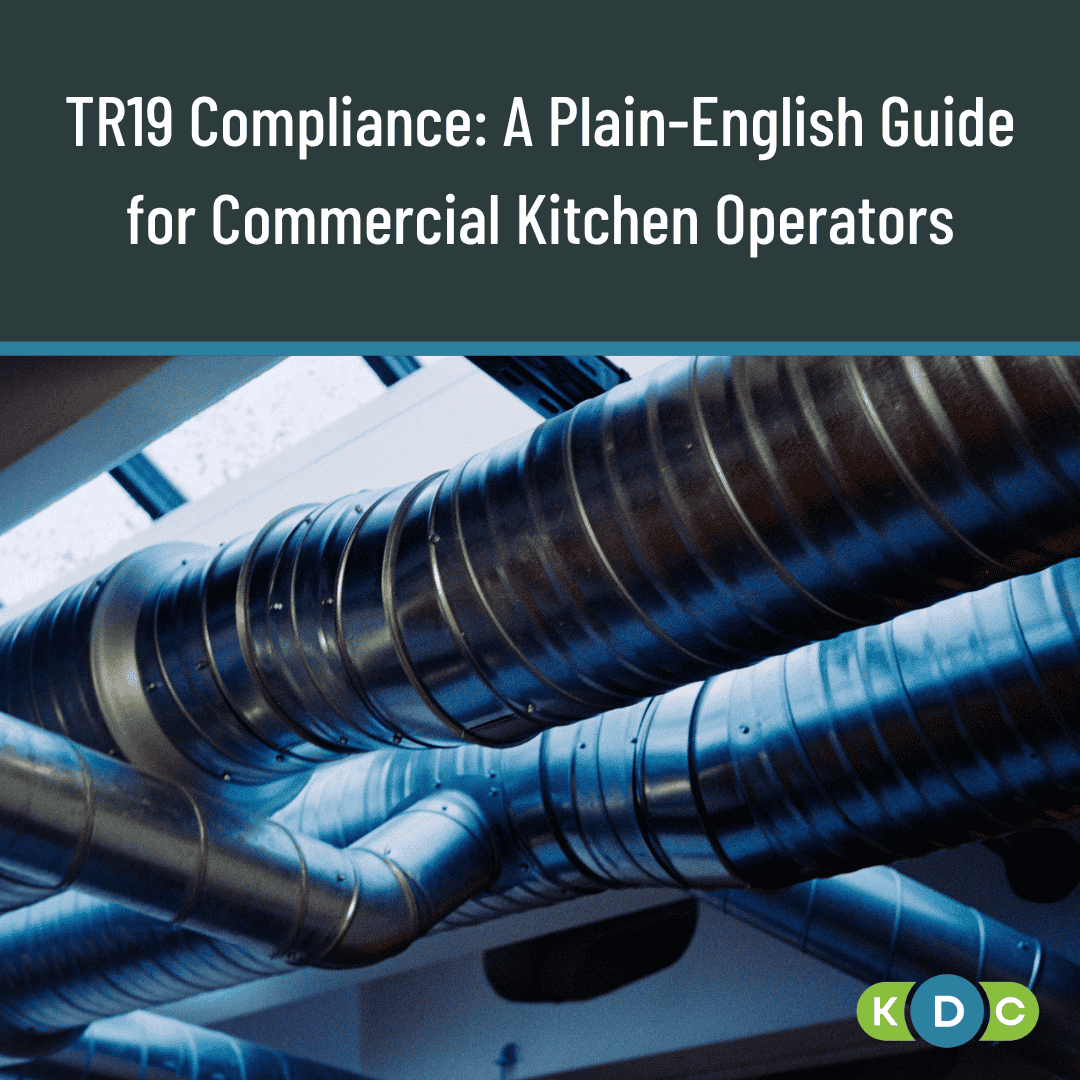
Your canopy filters might get a wipe-down once a week. Good on you for that. But the internal ductwork? The extractor fan chambers? The canopy plenums? Those are a different story altogether. Airborne grease travels through your extraction system every single service. Over time, it coats the interior of the ducts in a thick, flammable layer.
This is one of the most serious fire hazards in a commercial kitchen, as neglected ductwork has caused real fires in real kitchens. Know that the grease doesn’t announce itself; it just quietly builds up until something goes wrong.
What the law says
In the UK, commercial kitchen extraction cleaning is governed by the TR19® Grease specification. This standard sets out how frequently ductwork must be professionally cleaned based on the volume and type of cooking you do. TR19 compliance is often required for:
- Insurance validity (many insurers will void a claim if TR19 records aren’t in place)
- Fire safety compliance
- Passing EHO inspections
Hidden grease build-up areas like internal ducts can’t be cleaned with standard kitchen tools. This is professional-only territory, full stop.
High-level areas and structural blind spots
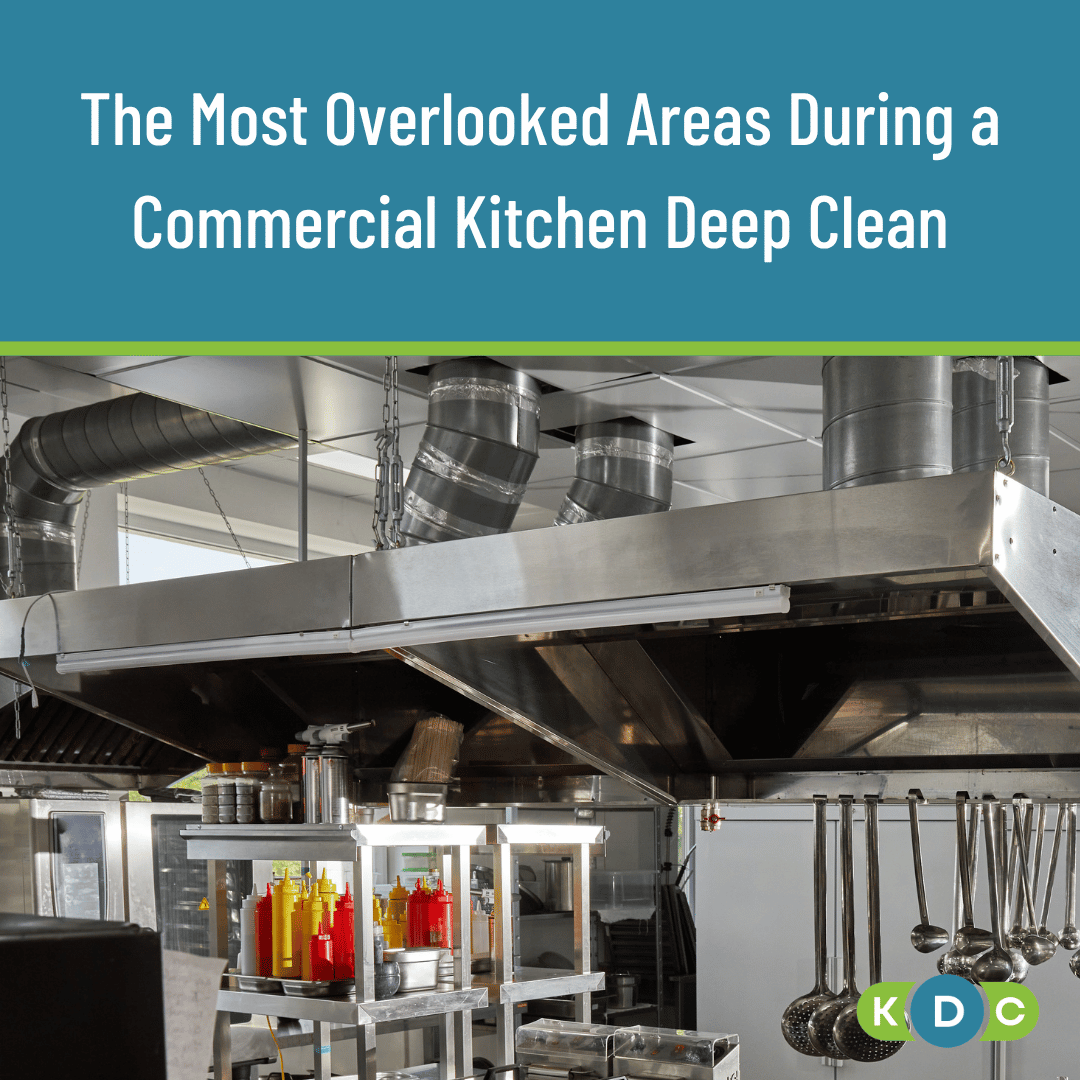
Most cleaning happens at eye level or below. But if you look up sometime, you might not like what you see. Ceilings, air vents, overhead pipework, the tops of tall refrigeration units and wall-mounted cabinets: these are the deep cleaning blind spots that get skipped in virtually every routine clean.
Yet grease and dust settle up there undisturbed. In time, that build-up becomes a contamination risk. A chunk of grease-laden dust dropping onto an open food prep surface below isn’t a situation anyone wants to explain to an EHO.
Light fixtures are another one. Grease vapour rises and coats the fittings, trapping dust. Ignoring lights affects air quality and, in some cases, becomes a hygiene issue if debris falls.
Structural cleaning – the kind that actually gets up into these hard-to-reach areas – is part of what separates a surface clean from a genuine deep clean.
Floor drains, gullies and grout
True, this is nobody’s favourite job. But floor drains are doing a lot of heavy lifting in a busy kitchen – collecting wastewater, food scraps and grease every single service. When they don’t get proper attention, things turn nasty quickly.
Neglected drains become a source of foul odours that waft through the kitchen (not exactly appetising for staff or EHOs). Worse, blocked or sludge-filled gullies are a perfect breeding ground for bacteria, which is a potential compliance issue if things back up during service.
Don’t forget the grout between floor tiles, either. Grease and food residue work their way into tile joints and sit there, harbouring contamination that a mop simply won’t shift. What’s needed:
- Remove and clean drainage grates properly
- Treat drains with the right products, like a biological cleaner or an appropriate commercial degreaser
- Scrub grout lines to remove embedded grime and restore hygiene
It’s unglamorous work, for sure. But a clean kitchen from the floor up means fewer odours, fewer blockages and reduced risk of contamination.
Cold storage seals and ice machines
The fridge gaskets nobody checks
Go on, run your finger along the rubber seal on a commercial fridge door. What you’ll likely find is a strip of accumulated crumbs, sticky residue and mildew that hasn’t seen a cloth in months. These gaskets are frequently overlooked during routine cleaning. Yet a damaged or filthy seal compromises the unit’s ability to hold temperature. This is a food safety issue, not just an aesthetic one.
So, wipe down the interior seals regularly and check for cracks or splits because a failing gasket on a busy cold store is a problem waiting to happen.
Ice machines: darker than they look
The inside of a commercial ice machine is warm, damp and dark when it’s not in use. These are ideal conditions for mould, slime and bacterial growth. The ice that comes out of it goes directly into customer drinks – something worth thinking about.
Ice machine internals need regular sanitising by someone who knows what they’re doing. It’s one of the most frequently overlooked kitchen appliances when it comes to deep cleaning, but is one of the riskiest to ignore.
Why structural deep cleaning requires the professionals
Kitchen staff are brilliant at keeping things ticking over day to day. But structural deep cleaning is a different discipline entirely. It needs specialist equipment, the physical capacity to move heavy kit, and the industry knowledge to know what thorough deep cleaning actually looks like versus what just looks clean. What areas are missed during kitchen cleans almost always come down to the same answer: the ones that needed professional attention from the start.
Food Standards Agency (FSA) compliance and EHO inspections hold commercial kitchens to a standard that a mop-and-bucket routine can’t meet on its own. Professional cleaning eliminates cross-contamination risks, protects expensive catering equipment from premature wear, and means your kitchen is genuinely clean.
Don’t let the hidden areas catch you out
Pay proper attention to your extraction ducts, floor drains, cold storage seals and the spaces behind your heavy equipment, so that your kitchen stops being a compliance risk and starts being somewhere you’re proud to cook in.
At KDC Food Hygiene Ltd, we offer professional commercial kitchen deep cleaning services across the UK, including TR19-compliant extraction cleaning, structural deep cleans and full kitchen hygiene programmes. If your kitchen is overdue for a proper sort-out, give us a bell and we’ll get it done right.
FAQs
What are the most overlooked areas in commercial kitchen cleaning?
The usual suspects are behind and beneath heavy cooking equipment, internal extraction ductwork, floor drains and grout lines, ice machine interiors, as well as high-level structural areas like ceilings and air vents. These spots rarely get touched during routine cleaning, but they’re where bacteria and grease quietly accumulate.
How often should a commercial kitchen have a deep clean?
It depends on how busy your kitchen is and what type of cooking you do. Most commercial kitchens benefit from a professional deep clean every three to six months, with TR19-compliant extraction cleaning scheduled according to usage frequency – quarterly for heavy use, annually for lighter operations.
What are the hidden grease and bacteria risks in a commercial kitchen?
Grease builds up inside extraction ducts, behind fryers and ovens, inside ice machines and along fridge door seals (areas where standard daily cleaning never reaches). Left untreated, these become fire hazards, sources of bacterial contamination and potential reasons for a failed EHO inspection.
Why can’t kitchen staff handle all the deep cleaning themselves?
Daily cleaning keeps surfaces ticking over, but structural deep cleaning needs specialist equipment, heavy lifting and professional-grade degreasers. The areas missed during kitchen deep cleans done in-house are almost always the hard-to-reach structural ones. These are exactly what EHOs and insurers expect to be properly maintained.
Does TR19 compliance really affect my insurance?
It does. If a fire starts in your extraction system and you can’t produce TR19 cleaning records, many insurers will refuse to pay out. It’s one of the most serious deep cleaning blind spots in terms of financial and legal risk, yet it’s one of the easiest to stay on top of with a scheduled professional clean.