

Structural Cleaning in Commercial Kitchens: What EHOs Expect
From ceiling and wall cleaning to commercial floor degreasing, here’s what EHOs expect from structural cleaning – and why it matters in a commercial kitchen.
Running a busy commercial kitchen is no small feat. It’s more like spinning plates while someone turns up the heat. Literally. Whether you’re keeping a hotel restaurant turning covers, feeding hundreds of students in a school canteen, or running a bustling bistro, the pace can be relentless. It’s understandable, then, that sometimes cleaning standards slip. But a daily wipe-down only goes so far. Beneath the surface of every professional kitchen, grease, bacteria and grime are quietly setting up camp where your cleaning cloth or mop can’t reach.
Environmental health officers (EHOs) are well aware of this. So when they drop by for a look-see, which may be unannounced, they’re not just checking your worktops. They’re having a proper nosy at corners, ceiling joints, behind the kit you haven’t moved since it was installed. Neglected structural surfaces can put a business in serious breach of food hygiene law, so if you operate anywhere in London or across the UK, getting your structural kitchen cleaning right is essential.
What is structural cleaning in commercial kitchens?
Structural cleaning goes well beyond the daily scrub-down of food-prep surfaces. It targets the building’s infrastructure – ceilings, walls, floors, light fittings, pipework, overhead beams and those grim, overlooked areas that nobody’s given any thought to since the kitchen opened.
Your daily cleaning routine simply can’t reach everything. Biofilms (that’s the microscopic layer of bacteria that builds up on surfaces over time) form in voids, in grout lines, and in corners where standard mops and cloths seldom venture. That’s why professional structural cleaning teams use specialist methods – think industrial steamers, pressure washing and heavy-duty degreasers – to properly treat these non-equipment surfaces and bring them back to a genuinely hygienic standard. It’s a different beast compared to a regular clean, so it needs a different approach.
Legal compliance: the Food Safety Act and EHO expectations
EHOs assess commercial kitchens against the Food Safety Act 1990 and EC Regulation 852/2004, the retained EU regulation that underpins UK food hygiene law. Both require food business premises to be designed and maintained in a way that allows for thorough cleaning and disinfection. That’s a legal obligation.
During an EHO inspection, structural requirements form a core part of the Food Hygiene Rating Scheme (FHRS) assessment. Inspectors look closely for:
- Cracked or missing tiles
- Peeling paint or damaged plaster
- Deteriorating grout or sealant
- Any surface that could harbour bacteria or prevent effective cleaning
Beyond the physical state of the kitchen, EHOs expect to see a documented Food Safety Management System (FSMS) built on HACCP principles (hazard analysis, critical controls). That means written records, cleaning schedules, and evidence that structural hygiene is being regularly monitored and controlled. The Food Standards Agency is clear on this, and food hygiene regulations leave little room for excuses when it comes to safety standards.
Eliminating hidden threats: grease, pests and fire risks
Here’s what a lot of kitchen operators don’t realise until it’s too late: the biggest hazards often aren’t the ones you can see.
Grease and grime that builds up in hard-to-reach areas – think behind ovens, above extraction canopies, inside ductwork – create ideal conditions for harmful bacteria to thrive. When that contamination is close to food-preparation zones, cross-contamination becomes a real and serious risk. EHOs know exactly where to look, so be aware that inadequate cleaning in these areas can trigger enforcement action fast.
Then there’s fire risk. Grease build-up in ventilation ducts is a genuine fire hazard that has caused devastating kitchen fires across the UK. Poor cleanliness in these areas is a safety issue that can put your staff – and your whole business – at risk.
Pests are another major focus for inspectors. Structural grime provides both food sources and hiding spots for rodents and insects. Deep cleaning non-equipment surfaces removes these harbourage points and makes it far harder for pests to get a foothold.
If you let it slide, the consequences can range from a poor FHRS rating and an improvement notice right through to formal closure. Without proper cleaning of these areas, you’re leaving yourself wide open to such scenarios.
Consider key areas: ceilings, walls and floors
Ceilings
Ceilings are among the least-considered areas. But did you know that grease drips from overhead surfaces and condensation collecting in ceiling joints can contaminate food below? Ceiling cleaning is one of the most commonly flagged issues during EHO inspections, particularly in high-heat cooking environments. A professional kitchen deep clean addresses this properly, not just with a damp cloth but with the right equipment and cleaning agents to remove what’s actually up there.
Walls
Wall surfaces absorb a constant fine mist of grease during cooking. Over time, that invisible coating becomes a breeding ground for bacteria, potentially making any food-prep area genuinely unsafe. Thorough wall cleaning limits bacterial growth and keeps vertical surfaces in a condition that an EHO would be happy to see.
Floors
Commercial floor degreasing is one of the most impactful jobs in any kitchen deep clean. Fats embed themselves into tile and grout over time, floor drains become blocked and surfaces become dangerously slippery. A proper commercial floor degreasing treatment removes built-up fats, clears the drains and dramatically improves slip resistance. This matters as much for your staff’s safety as it does for your compliance score.
Managing kitchen equipment and extraction systems
Structural cleaning goes hand in glove with the deep cleaning of your cooking equipment and extraction systems.
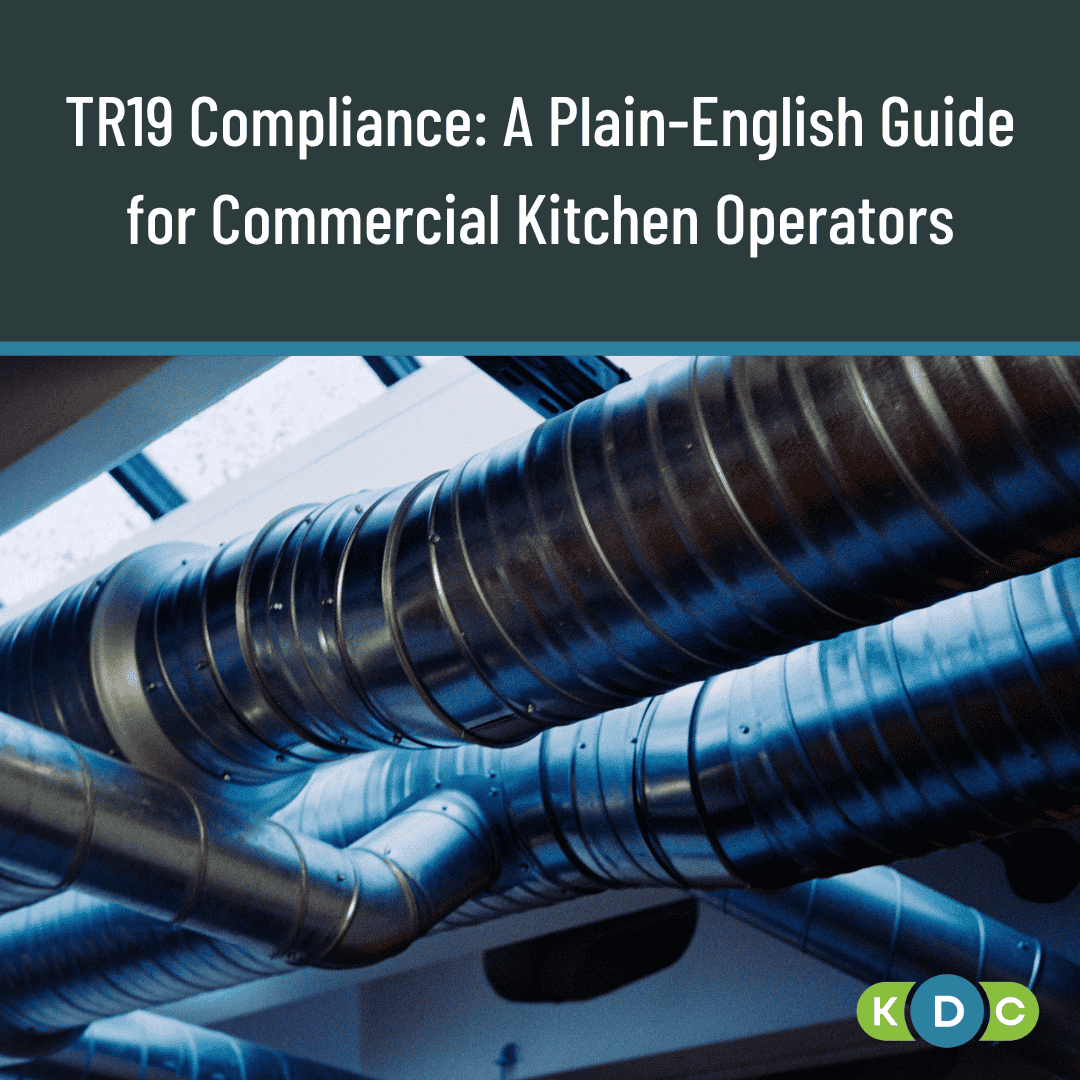
Your extraction ducts and canopy must be cleaned to TR19® Grease standards. This removes dangerous grease accumulation, improves air quality and tackles one of the most serious fire hazards in any kitchen environment. EHOs are fully aware of TR19 requirements, so a kitchen that can’t produce up-to-date kitchen extraction cleaning service records is going to raise red flags.
Hard-to-reach areas get special attention, too. Spots behind heavy appliances, underneath sinks, or inside pipework all need to be properly degreased and sanitised. The cleaning methods and cleaning products used in these areas matter, and a professional team will have the right equipment and the know-how to do it properly. Will your EHO check? Absolutely.
Frequencies and planning: creating a robust cleaning schedule
How often is structural cleaning actually required? That depends on your kitchen’s risk assessment and how intensively it’s used. As a rough guide:
- For high-volume kitchens (busy restaurants, hotel kitchens, hospital catering), quarterly structural cleans are worth considering.
- For moderate-use kitchens (schools, care homes, smaller cafés), every six months is a common benchmark.
- For lower-volume operations, an annual deep clean may be sufficient, supported by thorough regular cleaning between visits.
The key is that your cleaning schedule is documented and your cleaning checklist is kept up to date. EHOs expect to see evidence, such as verification logs, professional certifications and written cleaning procedures based on your specific kitchen setup. “We clean it regularly” won’t cut it without the paperwork to back it up.
To minimise disruption to your business, plan your structural deep cleans during off-peak hours or facility closures wherever possible. It allows cleaning teams to work without obstacles, and means you’re not trying to prep service around a pressure washer. A proper cleaning plan makes the whole process far smoother for you and for the professionals doing the work.
How we can help
Attempting a full structural clean without the right kit and know-how is a bit like trying to shift a week’s worth of chip fat with a bottle of washing-up liquid. It won’t cut it – and your EHO will know.
Partnering with KDC Food Hygiene Ltd means your kitchen gets the expert attention it needs. Our team understands exactly what EHOs look for, and we deep clean to a standard that gives you the best possible chance of a top FHRS score. We cut grime, not corners.
Ready for a kitchen that passes with flying colours? Give us a bell or drop us a line, and we’ll send you a quote shortly.
FAQs
What is structural cleaning in a commercial kitchen?
It’s a deep clean that targets the building’s infrastructure – ceilings, walls, floors, pipework and high-level areas – using industrial methods that go well beyond your daily cleaning routine.
How often is structural kitchen cleaning required?
It depends on how busy your kitchen is. High-volume operations should consider quarterly cleans, moderate-use kitchens typically every six months, and lower-volume sites at least annually.
What do EHOs look for during a structural inspection?
Cracked tiles, peeling paint, damaged grout, grease build-up, as well as any surface that could harbour bacteria or can’t be properly cleaned. They’ll also want to see documented cleaning schedules and records.
Why is grease build-up in ventilation ducts a fire risk?
Grease accumulating inside extraction ducts is a serious fire hazard. Ducts must be cleaned to BESA TR19® Grease standards to keep the risk in check.
Can’t we just do structural cleaning in-house?
A regular clean keeps things ticking over, but structural cleaning needs specialist equipment, industrial degreasers and trained professionals. Without them, you’re likely to miss the areas EHOs look at most closely.