

Top 10 Commercial Kitchen Hazards, Ranked
Discover the top 10 hazardous in kitchen environments ranked by risk. Essential health and safety kitchen guidance for UK restaurants in 2025.
Learn about the top 10 hazards in busy kitchen environments, ranked by risk. Plus, we include professional health and safety kitchen guidance for UK restaurants to follow in 2025 and beyond.
Commercial kitchens are bustling spaces where all your business’s magic happens. But let’s face it, they can be absolute minefields when it comes to health and safety protocols. Between the sizzling pans, the mad dash during service and the sheer number of people moving about, things can go pear-shaped pretty quickly if you’re not careful…
Speed matters in a commercial kitchen, of course. But if you’re cutting corners on safety, you’re asking for trouble. And we're not just talking about a telling-off from the Environmental Health Officers here. We’re talking about costly legal issues, injured staff, disappointed customers − and a reputation that’s harder to repair than a burnt pan bottom.
Whether you’re running a bustling restaurant, a hospital kitchen, a care home, or a school canteen, sticking to solid safety regulations is about protecting your people, your customers and your business. This blog will walk you through the top 10 hazards in kitchen environments, ranked by risk and how often they crop up in UK settings. From physical dangers to food-related nasties, every item on this kitchen hazard list needs managing to maintain compliance and keep everyone safe. We’ll be talking about restaurant safety hazards UK establishments face in 2025, plus the common causes of accidents in kitchens that businesses need to watch for. Read on to learn more...
First, a note on our ranking method
Our ranking looks at two key factors:
- The potential for severe injury or illness.
- The likelihood of causing immediate business failure or closure.
Some kitchen hazard scenarios might seem minor − until you realise they’re the ones that get kitchens shut down. Every hazard carries its own risks, so understanding them is your first line of defence. Just like with your car, it’s a bit like checking under the bonnet to see what needs attention.
The top 10 commercial kitchen hazards (ranked from least to most critical)
10. Manual handling and lifting injuries
Lifting heavy stock, shifting crates and hauling in orders is all part of the daily grind. But here’s a sobering fact: over 30% of injuries in the food and drink industry are musculoskeletal, caused by poor manual handling, according to statistics from the UK Health and Safety Executive (HSE).
No matter how strong you are or how many times you’ve hefted a sack of potatoes, your back isn’t indestructible. One wrong move and you could be very sorry. So always use the proper lifting technique: bend those knees, keep your back straight, engage your core and never be shy about grabbing a trolley or asking for help. Your future self will thank you.
9. Chemical hazards and exposure
Cleaning products are essential, but they’re also potential troublemakers. Chemical hazards can lead to poisoning or chemical contamination if not handled properly. Be sure to keep all cleaning supplies clearly labelled and stored well away from the stove and food preparation areas.
Another crucial rule that bears repeating is to never, ever reuse old food containers for storing chemicals. It might seem handy in the moment, but it’s a food safety disaster waiting to happen. One mix-up and you could have a serious incident on your hands.
8. Cuts and lacerations
Knives, slicers, graters and so on are the tools of the trade, but they’re also some of your riskiest bits of kit. Contrary to what some believe, using sharp knives is actually safer than you might think. A dull knife is often more dangerous because it’s more likely to slip, increasing your risk of injury.
How to keep yourself and your cooks safe:
- Always cut away from your body.
- Use proper disposal bins for broken glass.
- Store sharp knives securely in designated blocks.
- Keep your cutting board stable.
7. Electrical hazards and electrocution
Water and electricity are a dodgy combination at the best of times. In a kitchen environment where both are everywhere, you’ve got to be extra vigilant. Electrical hazards are no joke, as touching electrical appliances with wet hands or using faulty equipment can lead to serious harm.
Always turn off and unplug appliances when not in use or before cleaning. And if something’s playing up – sparking, making odd noises, tripping the electrics – report it to management straight away. Don’t try to fix it yourself.
6. Burns and scalds
This is a proper common kitchen accident, and one that can cause burns ranging from minor to third-degree. Hot surfaces, boiling liquids, steam from pots and those temperamental fryers are all culprits.
Some prevention tips:
- Always wear appropriate gear like oven mitts when handling hot items.
- Use pot holders for moving liquids.
- Never use wet towels or gloves near heat, as they produce steam that can cause a nasty burn.
- Announce when you’re walking behind someone with something hot.
Remember that steam is particularly sneaky. While it doesn't look threatening, it can cause more damage than you’d expect.
5. Slips, trips and falls
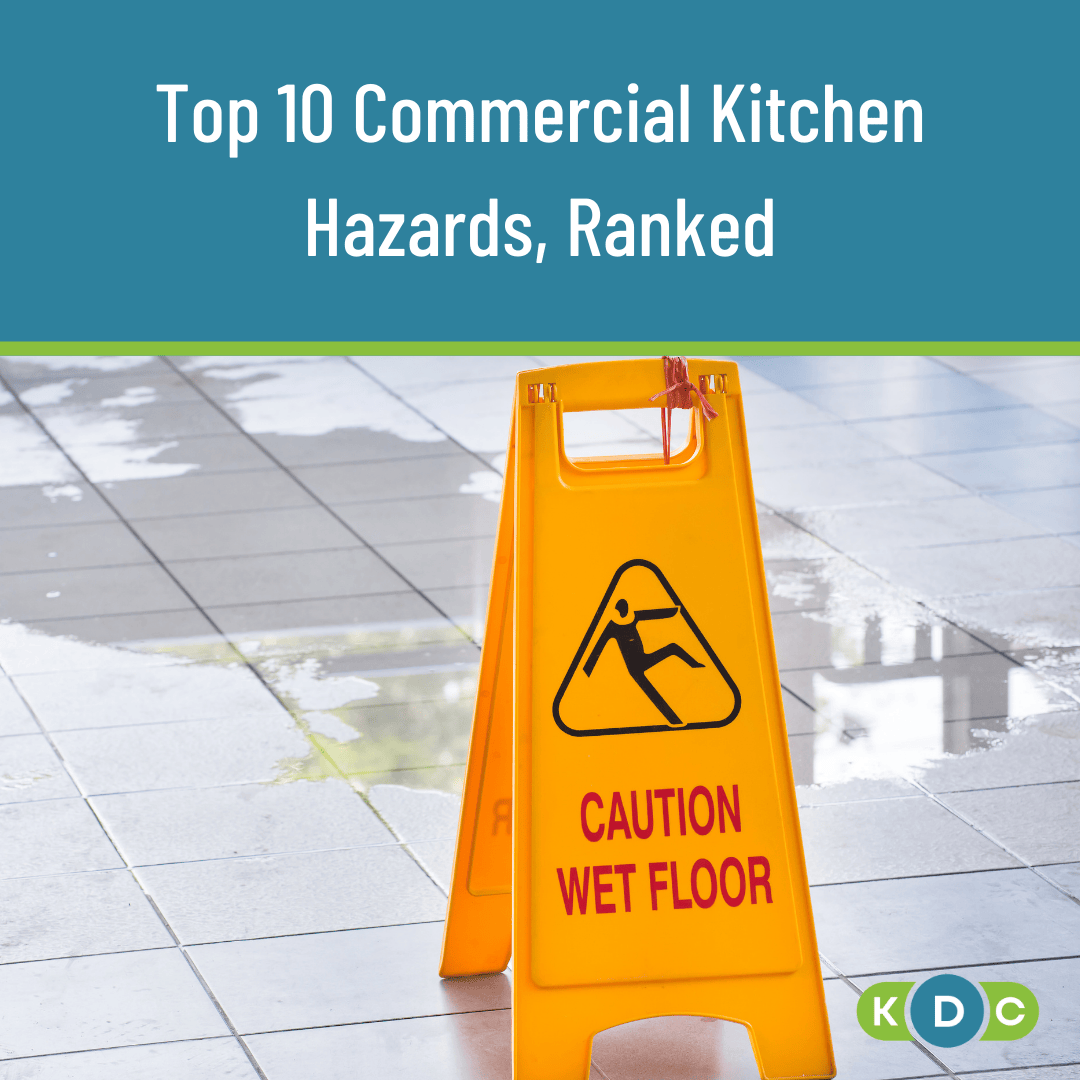
This one’s bread and butter for kitchen accidents and injuries. Slips, trips and falls are among the most common causes of accidents in kitchens. Yet they’re usually preventable. Grease, water, food debris, clutter, loose cables … they’re all waiting to trip you up when you’re rushing during service.
Your action plan:
- Invest in non-slip floor coverings and make sure all staff wear slip-resistant footwear.
- Implement a “clean as you go” policy.
- Deal with spills immediately; don’t leave them for later.
- Keep walkways clear of boxes and equipment.
These simple steps reduce the risk of slips significantly and keep your team on their feet where they belong.
4. Fire hazards
Fire hazard incidents are highly damaging and potentially deadly. In a commercial kitchen, you’re dealing with multiple ignition sources: fryers, gas connections, ovens and − the big one – grease buildup in your extraction system. It’s like a ticking time bomb waiting for a spark.
Critical fire safety measures:
- Schedule regular checks of gas and electrical appliances.
- Book quarterly deep cleaning of your canopy and ductwork (more frequently for heavy-use kitchens).
- Train all staff on how to use fire blankets and extinguishers properly.
- Remember: Never pour water over a grease fire, as that’ll spread it. Smother it instead.
Note that skipping professional cleaning of your extraction system doesn’t just increase the risk of kitchen fires. It could potentially void your insurance. That’s why professional cleaning is essential protection to reduce your risk of fires.
3. Poor ventilation and air quality
When poor ventilation is left unchecked, it creates a domino effect of problems. Staff suffer from heat exhaustion, breathing difficulties and exposure to noxious fumes. It’s a genuine kitchen safety issue.
Your kitchen ventilation system (hoods, fans, and ducts) needs regular cleaning to remove grease buildup and ensure proper airflow. A malfunctioning or filthy system will pose a risk to staff health and violate food safety standards. Professional inspection keeps everything running smoothly and your team breathing easy.
2. Improper temperature control and foodborne illness
Now for the serious stuff. Temperature abuse is a major food safety hazard that can lead to food poisoning from bacteria like E. coli or Salmonella. The danger zone sits between 5°C and 63°C, as bacteria multiply rapidly in this range.
The UK Food Standards Agency guidelines are clear:
- Cold food should be stored at 5°C or below.
- Hot food must stay at 63°C or above.
- Poultry needs cooking to 75°C (check with a calibrated thermometer).
Improper storage – like overcrowding your fridge – or improper food handling creates the perfect conditions for bacteria to throw a party. Regular temperature monitoring and rapid cooling of hot foods aren’t suggestions; they’re requirements.
1. Poor overall hygiene leading to infestations (the most critical hazard)
And here we are at the number one critical hazard. Poor cleaning and hygiene practices attract rodents, cockroaches and other unwelcome guests that can result in immediate kitchen closure.
Bacteria like Listeria and Campylobacter absolutely love the forgotten corners – behind fridges, inside extraction systems, underneath equipment. Your daily routine cleaning simply can’t reach these areas, which is where deep-seated grime accumulates and the spread of bacteria becomes a serious threat.
Essential hygiene protocols:
- Staff must follow the 20-second handwashing rule, especially after handling raw meat.
- Use separate, colour-coded cutting boards for different food types.
- Store raw meat at the bottom of the fridge to prevent yucky drips.
- Clean and sanitise surfaces between different food preparations.
Cross-contamination – one of the four Cs of food safety − is an invisible menace. You can’t see it, but following safe food handling practices conquers it.
Mitigating risk through training and compliance
Your kitchen is safe only if your least-trained team member is proficient. Think about that for a moment. It doesn’t matter how brilliant your head chef is if the weekend staff don’t know the emergency procedures or can’t operate equipment safely.
Safety training needs to be ongoing because food safety regulations change, new equipment arrives and people need refreshers. Environmental Health Officers expect to see training records, like food hygiene certificates, and your team deserves to work in a place that invests in their safety.
Training should cover:
- All hazards listed above.
- Correct equipment operation.
- First aid location and basic procedures.
- What to do in emergencies.
Implementing robust safety management – including record keeping, continuous auditing, regular reviews – ensures you reduce the chances of serious incidents. It might feel like paperwork, but these safety procedures create necessary protections that could save your business.
How KDC Kitchen & Duct Clean Ltd can help your business and staff stay safe
Reducing risks in commercial kitchens requires consistent effort and proper adherence to safety and hygiene protocols. Daily cleaning keeps surfaces tidy, but grease and bacteria can hide in places your regular cleaning can’t reach.
That’s where we come in. At KDC Kitchen & Duct Clean Ltd, our expert team tackles the deep cleaning your kitchen needs, covering ventilation systems, degreasing kitchen walls, extraction ductwork and overall hygiene maintenance that helps you achieve compliance and avoid costly legal issues.
Need a proper sort-out? Give us a bell. We’ll bring the elbow grease, so you can focus on what you do best: running a brilliant kitchen.
FAQs
What is the most critical hazard in a commercial kitchen?
Poor overall hygiene leading to infestations takes the top spot. It attracts pests, harbours dangerous bacteria like Listeria and Campylobacter in hidden areas − and can result in immediate closure. Daily cleaning isn’t enough, as deep-seated grime in forgotten corners needs professional attention.
Why are slips, trips and falls so common in kitchens?
They’re one of the most frequent accidents because kitchens are wet, greasy environments with lots of movement during busy service. Spills, food debris, clutter and loose cables all contribute. The fix? Non-slip flooring, proper footwear and sorting out spills immediately.
How often should extraction systems be professionally cleaned?
For heavy-use kitchens, quarterly deep cleaning is essential. Grease buildup in your canopy and ductwork is like a ticking time bomb for fires. Skipping professional cleaning doesn’t just increase fire risk – it could potentially void your insurance.
What temperature should cold food be stored at in UK commercial kitchens?
Cold food must be stored at 5°C or below, following Food Standards Agency guidelines. The danger zone between 5°C and 63°C allows bacteria to multiply rapidly. Hot food needs to stay at 63°C or above and poultry must reach 75°C when cooked.
Is a sharp knife really safer than a dull one?
Absolutely. A dull knife is more likely to slip when you’re cutting, which increases your injury risk. Sharp knives cut cleanly with less force needed, giving you better control. Just remember to always cut away from your body and store knives securely.