

EHO Inspections: What Environmental Health Officers Actually Check
EHO inspections are unannounced. Know what environmental health officers check in a commercial kitchen to keep your food hygiene inspection on track.
An EHO inspection assesses three areas of your food business: how food is handled, the condition of your premises, and how confidently your team manages food safety every day. EHOs don’t ring ahead to give you time to hide the manky fridge. They turn up, look at what’s actually happening, and score you on it.
This guide is for managers in high-volume commercial kitchens – in restaurants, hotels, hospitals, school canteens, takeaway kitchens, stadium catering units and contract caterers – who want to know exactly what’s on the list for an EHO visit. If food safety is your responsibility, read on, because the time to understand what an EHO is looking for is well before they’re standing in your kitchen.
What is an EHO inspection?
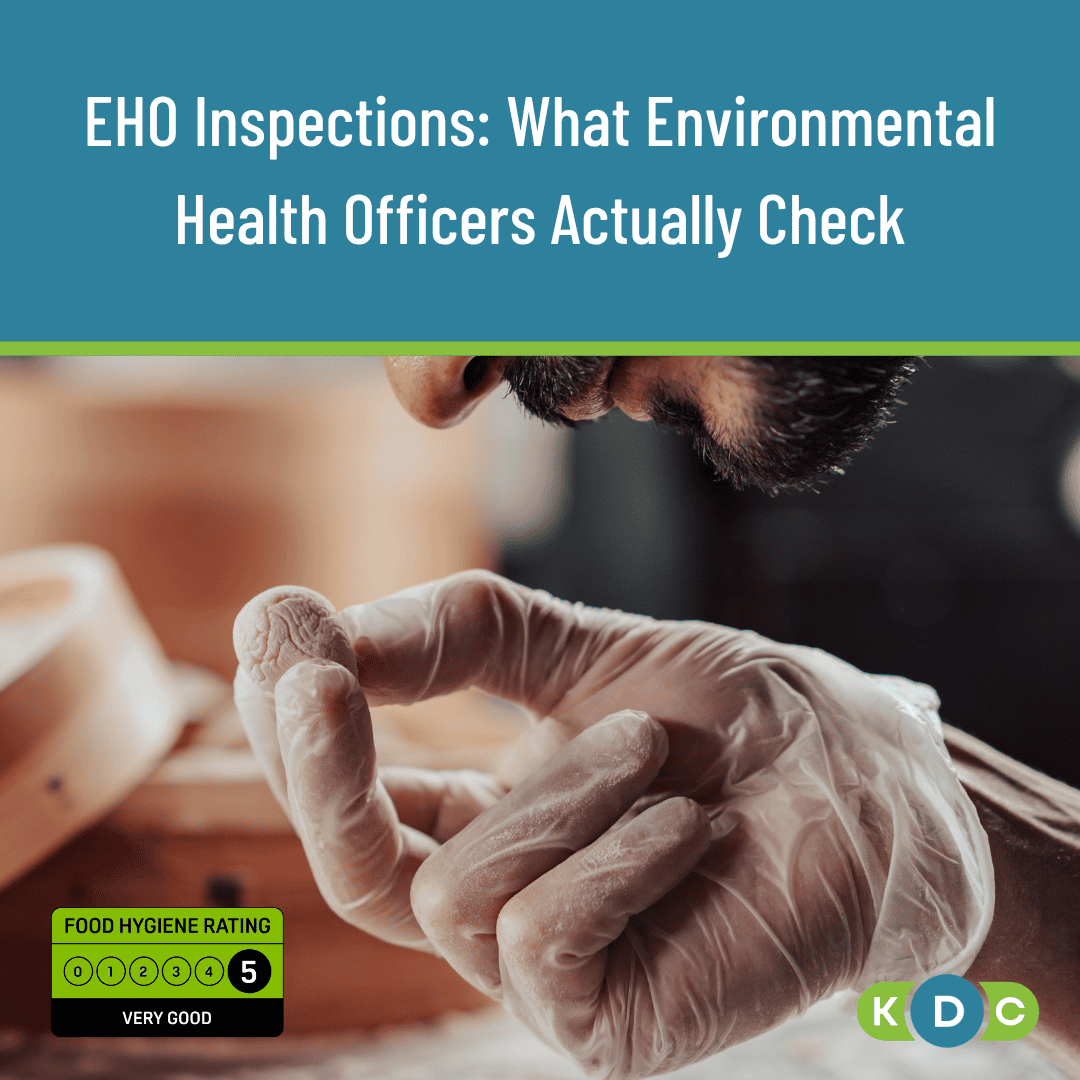
Environmental Health Officers are employed by local authorities and inspect food businesses under the Food Law Code of Practice (England). Their job is to check compliance with food safety legislation and protect public health. Every visit produces a score under the Food Hygiene Rating Scheme – a rating that’s published publicly and visible to anyone who looks. The Food Standards Agency provides national oversight and policy for England, Wales and Northern Ireland.
The scale runs from 0, which means urgent improvement is required, to 5, which means very good. There’s no soft landing with a low score. It’s usually published soon after every inspection, so customers can check it online. A lower rating (1 or 2) can have a measurable impact on trade. The only route to changing it is passing a follow-up inspection.
What do EHOs look for in a commercial kitchen?
EHOs inspect every food business across three official categories: food hygiene and safety, the structural condition of the premises, and confidence in management. All three feed into the final rating.
1. Food hygiene and safety
This is about how food is handled on a normal working day. Temperature control is assessed at every stage, including cooking, reheating, cooling, and chilled storage. All need to follow safe procedures. Cross-contamination is looked at closely: raw and ready-to-eat foods must be kept apart using separate equipment and clearly designated areas, and staff need to understand the reasoning behind it, not just follow a laminated sign on the wall.
Personal hygiene is also part of the picture. Clean uniforms, hair tied back, and proper handwashing (especially after handling raw meat or visiting the loo) are all assessed. An officer who witnesses a member of staff skip the sink and head straight back to a prep surface will write it down.
2. Structural requirements
The physical state of the premises gets a proper going-over. Ventilation, lighting, drainage, layout, and pest control all come under scrutiny. Surfaces need to be in good repair, and any gaps or cracks that give pests a route in need to be addressed before the officer finds them first.
Where kitchens often come unstuck is in the spots that don’t get attention every day. Think behind equipment, inside extraction hoods, and up in the ductwork. Grease buildup in exhaust ducts is a fire hazard, and it tells an EHO that cleaning standards aren’t what they should be. A ventilation system caked in grease is not going to go unnoticed, and it won’t go unrecorded either. Looks like Freddy Krueger’s had a fry-up up there? That’s not a good look during an inspection.
Regular professional deep cleaning of extraction and ventilation systems keeps these areas in the kind of condition that doesn’t prompt an officer to reach for a notice pad.
3. Confidence in management
This section looks at whether the business has Food Safety Management Systems (FSMS) in place and whether the people responsible for running the kitchen actually understand them. A folder gathering dust on a shelf won’t cut it. The officer’s not daft. They can tell a system that’s actually used every day from one that got a last-minute polish the night before.
A strong result here tells the EHO your kitchen can be trusted to stay compliant without anyone watching over it.
The EHO kitchen inspection process: What actually happens?
When an EHO arrives, you must allow reasonable access to the officer. This is a legal requirement, and there’s no basis to delay or ask them to come back later. The officer will inspect equipment, check food temperatures with a calibrated thermometer, and observe staff going about their normal work. Photographs or food samples may be taken where something gives cause for concern.
The walkthrough is hands-on. The EHO is checking what’s actually happening in the kitchen against what the records say should be happening.
Staff will also be questioned directly. Allergen controls, temperature monitoring, and the correct response when a fridge temperature falls outside safe limits are all standard territory. Inspectors will expect all staff, not only managers, to have enough knowledge about their role and kitchen processes to answer any questions.
Things that regularly catch kitchens out during a food hygiene inspection:
- Staff unable to explain allergen procedures for a dish currently on the menu.
- Temperature logs with gaps, or entries that look suspiciously uniform across multiple days.
- Refrigeration units running above the safe threshold.
- Extraction hoods and ductwork with significant grease accumulation.
The visit can run from 30 minutes to several hours, depending on the size of the operation and what comes to light.
Crucial documentation for your EHO checklist
A clean kitchen is half the battle. Documentation is how a food business proves its standards hold up every single day, not just during an inspection. EHOs need written evidence of compliance, and gaps in the paperwork hit the confidence in management score directly.
Have the following accessible at all times:
- A Food Safety Management System (FSMS). Most commercial kitchens use a HACCP (Hazard Analysis and Critical Control Points) approach or the Safer Food Better Business pack, which the Food Standards Agency produces for businesses in England.
- Daily temperature logs, completed consistently with no unexplained gaps.
- Cleaning schedules showing what gets cleaned, by whom, and how often.
- Pest control reports from a contracted professional service.
- Staff training records, including food hygiene certificates and allergen awareness training.
If any of these are missing or look like they’ve been filled in the morning of the visit, the officer will take note. A solid paper trail needs to match what’s happening in the kitchen on every shift.
Failing an EHO inspection: consequences in the UK
A poor inspection result doesn’t automatically mean immediate closure, but the consequences can escalate fast, and some enforcement actions take effect the moment the officer decides they’re warranted.
The enforcement process works like this:
- Advisory letter: For minor issues, an informal letter outlines what needs to change. It carries no legal force on its own, but ignoring it ahead of a follow-up visit is a poor strategy.
- Hygiene Improvement Notice: Issued when there’s a breach of safety law. Sets a formal deadline for corrective action. Failing to meet that deadline triggers further enforcement.
- Hygiene Emergency Prohibition Notice: Served when there’s an immediate risk to public health. Severe pest infestations, serious contamination hazards, or conditions likely to cause food poisoning can all trigger this. It forces an immediate stop to trading, with no grace period.
- Prosecution: Persistent or serious breaches of safety law can lead to prosecution under the Food Safety Act 1990. Penalties range from substantial fines to, in the most serious cases, imprisonment.
Your food hygiene rating is published online after every inspection. The rating goes live before any appeal can happen, but you do have options. You can formally appeal the rating with your local authority (usually within 21 days, depending on the local authority), or request a re-inspection once you’ve fixed the issues (some councils may charge a small fee for this).
How to prepare for an EHO visit
The straightforward answer is to run a compliant kitchen every day. EHOs are experienced at spotting operations that only tighten up when they sense someone’s coming.
Practical steps every commercial operator should have embedded as routine include:
- Running regular internal audits using your FSMS and acting on what they turn up, not just filing the results.
- Keeping health and safety records current, properly completed, and easy to locate at short notice.
- Ensuring allergen training and food hygiene procedures are documented, understood by all relevant staff, and refreshed regularly rather than covered once at induction.
- Scheduling routine professional deep cleans as part of a regular maintenance programme. This includes extraction systems and ventilation ductwork, not just the surfaces that are easy to reach.
How we can help
KDC Kitchen & Duct Clean Ltd deep-cleans and de-greases commercial kitchens up and down the UK. So when the EHO shows up, your ducts aren’t the thing making headlines. The team works with restaurants, hotels, hospitals, school canteens, takeaways, stadium operations and more to keep premises in inspection-ready condition and earn top food hygiene ratings – not just once, but consistently.
Need a proper sort-out? Give us a bell or sign up for a free quote on our website. We’re always happy to help.
FAQs
What triggers an EHO inspection?
Most are routine and unannounced, scheduled by the local authority based on the perceived risk level of the food business. A new operation will typically be visited fairly quickly after opening, and higher-risk kitchens are inspected more frequently. Complaints from customers or staff can also prompt a visit outside the regular cycle.
How often do EHO inspections happen?
There’s no strict schedule; it depends on your food hygiene rating and the nature of the business. A kitchen rated 5 in a lower-risk category might go two or three years between visits. A lower rating or higher-risk profile means more frequent inspections. There’s no fixed timetable, which is exactly why daily compliance matters more than a last-minute tidy-up.
Can dirty extraction ducts affect my food hygiene rating?
Yes. Grease build-up inside extraction systems and ductwork is assessed under the structural requirements section of the inspection. An officer who spots a heavily contaminated canopy or a blocked duct will flag it, and it can affect your score. Regular professional extraction cleaning is one of the more straightforward ways to keep that part of the inspection clean.
What is a Hygiene Improvement Notice?
A Hygiene Improvement Notice is a formal legal document issued when a food business is found to be in breach of food safety law. It sets out exactly what needs fixing and gives a specific deadline for doing it. Non-compliance leads to further enforcement action, so it’s not something you can sit on.
Do I have to let an EHO into my kitchen?
Yes. Granting access to an authorised Environmental Health Officer during reasonable hours is a legal requirement for any food business. Refusing entry or obstructing an officer is an offence under food safety legislation. In practice, most visits are straightforward. Answer honestly, show you know your procedures, and you’re halfway there already.

.png)