

What Is an FSA Food Hygiene Rating and Why Does It Matter for Your Commercial Kitchen?
Food hygiene ratings shape consumer trust across England, Wales and Northern Ireland. Find out how your food business can earn – and keep – a 5.
Your FSA food hygiene rating tells customers and inspectors exactly how seriously you take food safety.
Administered by the Food Standards Agency (FSA) in partnership with local authorities, the scheme sees unannounced visits from your local authority’s environmental health officers, who award your hygiene rating based on the standards found in your commercial kitchen. And whether you run a restaurant, a school canteen, a care home kitchen, or a hotel catering operation, that little green sticker carries a lot of weight.
The Food Standards Agency oversees the Food Hygiene Rating Scheme across England, Wales, and Northern Ireland (Scotland has a separate scheme, which is voluntary). It gives the public a reliable, simple way to judge whether a food business is safe to eat from, before they ever set foot through the door.
What is the 0–5 scale, and how are the scores determined?
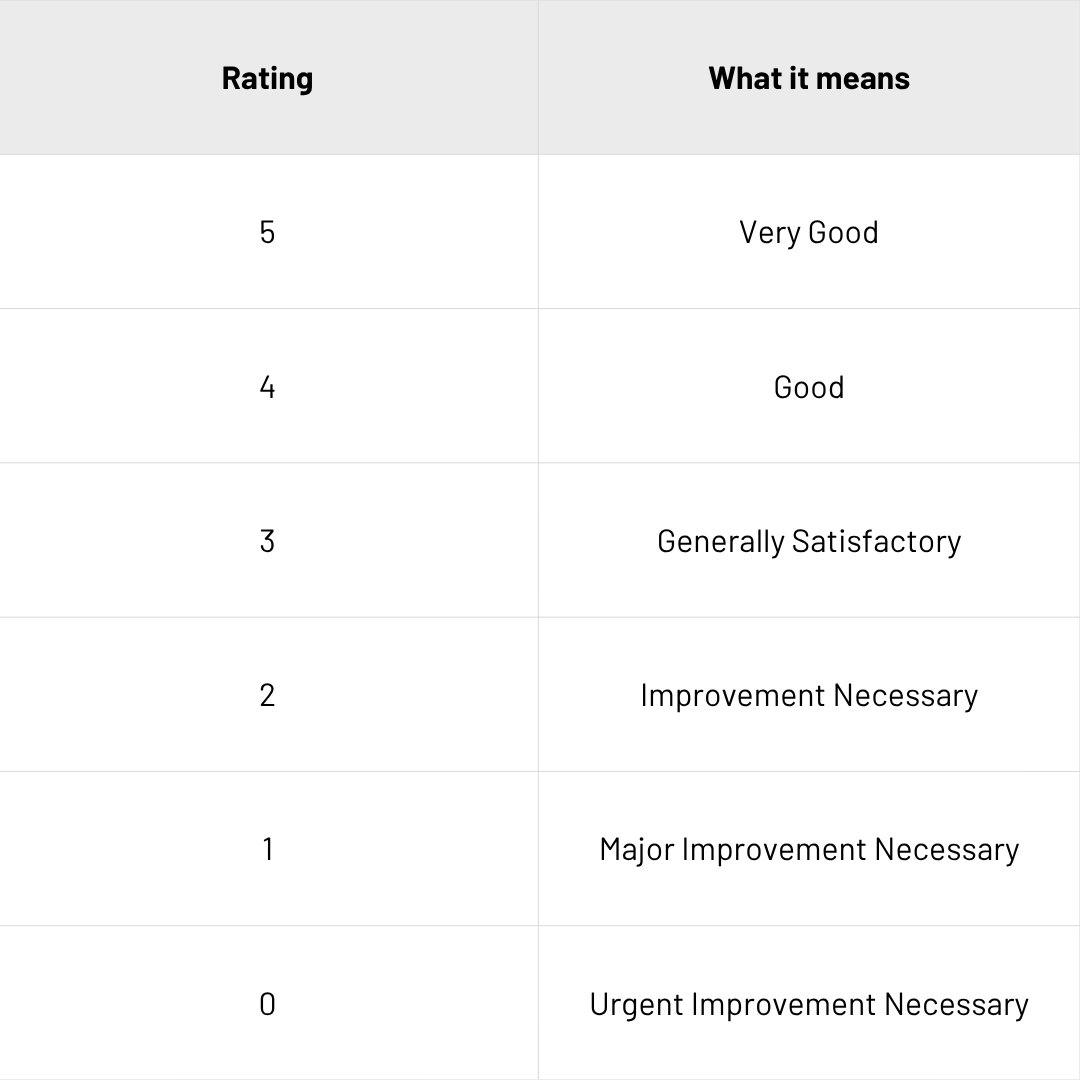
An FSA food hygiene rating runs from 0 to 5. A score of 5 means “Very Good”, which is the gold standard every food business should be aiming for. At the other end, a 0 means “Urgent Improvement Necessary”, which is about as welcome as a rat in the walk-in.
Here’s the full breakdown:
When an environmental health officer (EHO) from your local authority comes for an inspection (often unannounced, mind you), they assess three key areas of your premises. Each one carries real weight in the final FSA rating scores UK businesses receive:
- Hygienic food handling: How food is prepared, cooked, reheated, cooled and stored. Are your temperatures right? Is raw meat nowhere near the salad prep area?
- Condition of the premises: The physical state of the kitchen itself. Lighting, ventilation, layout, pest control and how clean it all actually is. Inspectors are looking at your extraction canopies, your floors, your walls … all of it.
- Food safety management: The paperwork, training records and systems you have in place to maintain standards. Think hazard analysis and critical control point (HACCP) plans, temperature logs, cleaning schedules.
The EHO scores each area individually, and the lowest score across the three pulls the overall rating down.
The EHO scores each area individually, and the three scores are combined into a total. However, if your worst-performing area exceeds the threshold for your provisional rating band, your overall rating will drop until it falls within an acceptable range – meaning a single weak area can pull your entire rating down. That’s the bit that catches a lot of operators off guard.
Why this matters for restaurants and commercial kitchens
A strong FSA rating directly affects your bottom line. In the latest annual FSA survey on public perceptions of their ratings scheme (published in March 2026), 55% of respondents said they had checked the food hygiene rating of a business in the last year. A significant number of respondents (55%) said the lowest score they’d accept was a 4 (“Good”). Score any less, and that’s potential revenue walking out the door.
Word gets around fast, too. In the age of Google reviews and Tripadvisor, a poor rating doesn’t just sit on a sticker in the window – it follows you online.
Delivery platforms have added another layer. Many third-party services now require a minimum hygiene rating before a business can be listed or remain active on their platform. Drop below that threshold and you lose access to a whole channel of orders. Deliveroo, for example, states clearly on their website: “You need an FSA hygiene rating of at least 2 to list on the Deliveroo platform, unless you fall within an Exception”.
The legal picture varies across the UK
This is where it gets a bit patchwork, so it’s worth knowing:
- In Wales and Northern Ireland, displaying the rating sticker is a legal requirement.
- In England, display is voluntary, but customers absolutely expect to see it. Refusing to put it up may raise eyebrows.
But wherever you operate, the rating is publicly searchable on the FSA website. Customers can, and do, look you up before they book.
The true cost of a zero rating
A zero FSA rating means your food business poses an immediate risk to public health – a serious finding of significant non-compliance.
The consequences can include:
- Emergency closure notices issued by the local authority
- Heavy fines and potential prosecution
- Mandatory reinspection before you’re allowed to reopen
The financial hit from even a temporary closure can be devastating. But the longer-term damage to your reputation is often worse. Customers who see a 0 on record don’t tend to give second chances. Loyal regulars disappear, and the word-of-mouth damage can take years to repair, if it’s repairable at all.
Don’t wait until you’re in that position. The time to act is well before an officer stops by for a gander.
Best practices for achieving and maintaining a 5-star score
A 5-star food hygiene rating is well within reach for any food business that takes hygiene seriously and stays on top of it consistently. Here’s what that looks like in practice:
Staff training and personal hygiene
Your team is your first line of defence. Everyone handling food needs proper training in personal hygiene, safe food handling and cross-contamination prevention. That training needs to be documented, as records really matter.
Robust food safety management processes
Inspectors want to see that your food safety management isn’t just something you cobble together before an inspection. That means:
- Daily temperature checks on fridges, freezers and cooked food
- Completed HACCP documentation that reflects what actually happens in your kitchen
- Allergen records that are accurate and up to date
- Clear procedures for staff to follow when something goes wrong
Keeping records current
Your paperwork needs to move with your kitchen. If you’ve changed suppliers, updated your menu, or taken on new equipment, your food safety records should reflect that. Inspectors notice when the paperwork doesn’t match the reality of the kitchen. Review and update your cleaning schedules and procedures regularly, not just when a renewal is coming up.
The physical condition of your kitchen
Even if your food handling is spot-on and your records are immaculate, the physical condition of your premises is judged separately – and it can drag your whole score down.
Grease build-up in extraction canopies, blocked or poorly maintained ventilation, ingrained dirt on equipment, and dirty walls or floors are all red flags for an environmental health officer. These are hygiene standards failures, not minor issues, so they’re scored accordingly.
This is why a deep, professional clean of your kitchen’s structure and equipment should form part of complying with the rating scheme.
How we can help you protect your rating
The physical condition of your premises is one of the three pillars your FSA rating score is built on, and it’s the one that specialist deep cleaning directly addresses.
At KDC Kitchen & Duct Clean Ltd, we provide professional deep-cleaning services for commercial kitchens across the UK, covering:
- Extraction canopies, ductwork and ventilation systems
- Commercial cooking equipment: ovens, fryers, grills, ranges
- Structural surfaces: walls, floors and ceilings
We know exactly what environmental health officers are looking at, which means nothing gets missed or left to chance.
Ready to protect your rating and keep the inspectors happy? Give us a shout. We’ll handle the grime so that you can focus on the cooking.
FAQs
How often does a food hygiene inspection take place?
There’s no fixed schedule. Inspections are unannounced, and the frequency depends on your business type and previous rating. Higher-risk premises are visited more often.
Does a food hygiene rating expire?
No, but it reflects the condition of your kitchen at the time of inspection. If standards slip after a good rating, the next visit will catch it.
Can a food business request a re-inspection?
Yes. In England, Wales and Northern Ireland, food businesses can request a re-inspection after making the required improvements, though a fee applies in England, which varies by local authority. A re-inspection won’t happen until three months after your last inspection.
What happens if a food business disagrees with its rating?
The business can appeal to the local authority. If the appeal is upheld, the rating is reviewed and potentially revised.
Does a food hygiene rating cover food quality or taste?
No. The rating only covers hygiene, cleanliness and food safety management, not the quality or taste of what’s on the menu.

.png)