

TR19 and Fire Safety Compliance: How to Reduce Fire Risks in Commercial Kitchens
Learn how TR19 Grease compliance reduces fire risks in commercial kitchens through proper extraction cleaning, canopy maintenance and grease removal in the UK.
Fire safety in a commercial kitchen is something you simply can’t afford to get wrong, as the risks are real. Sadly, kitchen fires are more common than most people think. But there’s good news: the vast majority are entirely preventable.
It all comes down to having the right knowledge and keeping on top of your cleaning. That’s because grease accumulation is the number one fire hazard in commercial kitchens, and that’s where the crucial TR19 guidelines come in.
This ‘UK best practice guide’ sets out exactly how to manage fire risks and keep your kitchen safe. In this blog, we’ll walk you through what TR19 means for kitchen operators, why it matters for safety and compliance in commercial settings, and how professional deep cleaning services can help your fire-prevention efforts.
Understanding TR19® Grease: The UK standard for ventilation cleanliness
TR19 is a set of guidelines developed by the Building Engineering Services Association, or BESA for short. It’s the recognised standard for keeping kitchen ventilation systems clean and safe.
There are actually two parts to TR19. TR19 Grease is the one we’re focused on here. It deals specifically with removing grease to reduce fire risk in commercial cooking environments. The other, TR19 Air, covers dust and general hygiene in ventilation ducts, but that’s not our main concern when talking about kitchen fires.
What does TR19 actually require?
The standard sets out the required levels of cleanliness for your kitchen ventilation and extraction systems. After a proper clean, your system should have less than 50 micrometres of grease residue left behind, which is tiny. A qualified technician will verify this using specialist equipment, so there’s no guessing involved.
TR19 standards are recognised right across the UK − and for good reason. They work, so following these guidelines means you’re doing everything you can to reduce fire risk and keep your kitchen compliant with safety regulations.
Identifying major fire hazards in commercial kitchens
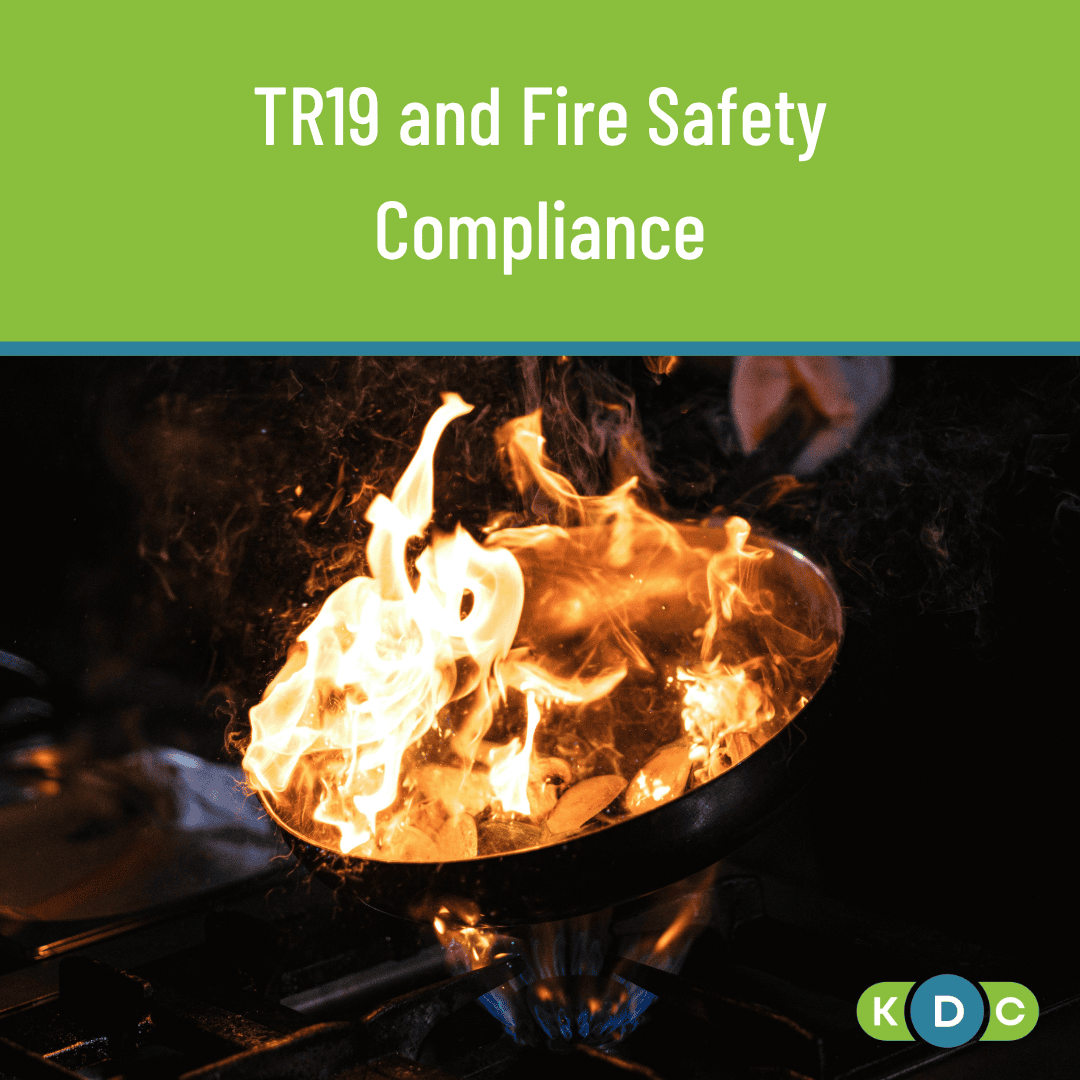
As mentioned, the biggest culprit when it comes to fire risk is grease buildup. Fat and grease accumulation in your extraction system is a recipe for disaster because those sticky deposits are highly flammable.
The sobering reality is that built-up grease inside ducts is responsible for up to 70% of fires in commercial kitchens, according to Kent Fire and Rescue Service. That’s significant. When grease ignites, it can cause a serious fire that spreads through your entire ventilation network in minutes. It’s the sort of fire that could shut you down for weeks, if not permanently.
Of course, grease isn’t the only fire hazard you need to watch for. Faulty equipment, open flames and hot oils all add to the risk. But when it comes to prevention, cleaning to prevent grease deposits from building up is absolutely essential.
TR19 in practice: Essential cleaning areas and components
So where, exactly, does TR19 cleaning focus on? It’s all about your extraction system, which is where the real fire risk lurks. Here’s what you need to consider…
Kitchen canopy
This is where it all starts. Your kitchen canopy is the first point where grease gets captured, and it collects a surprising amount of sticky residue. Kitchen canopy cleaning means getting into every filter, every surface and every corner where grease likes to hide, and doing so at regular intervals.
Ductwork and extraction
The internal ductwork is the bit most people forget about because, well, you can’t see it. But that’s exactly where grease builds up in thick, hardened layers. Proper duct cleaning removes those deposits and gets your system back to a safe state. This job requires specialist equipment and a bit of elbow grease.
Commercial kitchen ventilation systems
Your fans, your filters, your entire extraction setup need thorough attention. Ventilation cleaning ensures that every component of your kitchen extraction systems is working as it should. When grease is removed properly, your ventilation runs more efficiently, odours disappear and, most importantly, the fire risk drops right down.
Establishing the correct cleaning frequency
So how often should you actually be cleaning? It truly depends on how heavily your kitchen is used. But frequency is crucial when it comes to keeping fire hazards at bay.
TR19 sets out some clear minimum standards for cleaning frequency:
- Heavy use (12 to 16+ hours a day): Clean every three months.
- Moderate use (6 to 12 hours a day): Clean every six months.
- Light use (2 to 6 hours a day): Cleaning at least once a year (every 12 months).
Note that these are the baselines. If you’re running a busy chippy on a Friday night or a hotel kitchen pumping out breakfasts, lunches and dinners non-stop, you might need to clean even more often. The key is to stick to a proper cleaning schedule and keep an eye on the results. If your pre-clean inspections show heavy buildup, that’s a sign you need to increase your cleaning frequency and thoroughness.
Regular cleaning isn’t just good practice; it’s something your insurer will want to see evidence of. Stick to cleaning schedules, tick off on cleaning checklists and keep an eye on these paper trails. Trust us, keeping on top of this now is far easier than dealing with a rejected claim later.
Why TR19 compliance is non-negotiable
Here’s why compliance isn’t optional:
Legal and safety obligations
Commercial kitchens in the UK must follow certain fire safety regulations, including the Regulatory Reform (Fire Safety) Order 2005. If you’re not meeting the required safety standards, you’re not only putting your staff and customers at risk, you could face consequences such as fines, legal prosecution and potentially even a closure order. Showing that you follow TR19 fire regulations proves your legal compliance and shows that you take health and safety seriously.
Insurance requirements
Know that most insurers require documented evidence of TR19 compliance. If a fire breaks out and you can’t prove you’ve kept up with your cleaning, your claim could be denied outright. Even if your kitchen looks spotless on the surface, internal grease buildup is what matters. Legal and insurance requirements go hand in hand, so demonstrating due diligence with proper documentation is essential for insurance coverage.
Operational benefits
Beyond the legal stuff, TR19 compliance brings real benefits. A clean extraction system improves indoor air quality, making your kitchen a healthier place to work. Your staff will notice the difference, as will any EHO inspecting your premises.
The TR19 certification process: proving your due diligence
So, how do you actually prove you’re TR19 compliant? This is where the TR19 compliance document comes in. It’s provided by qualified cleaning companies, such as ourselves at KDC Kitchen & Duct Clean Ltd, as formal proof of cleaning, which is vital for both inspections and insurance purposes.
To get certified, your extraction system needs to be inspected, cleaned and then verified by qualified professionals who follow TR19 guidelines to the letter. The post-cleaning report provides detailed documentation of everything that’s been done.
What’s included in the post-cleaning report?
- Before-and-after photos: Visual proof of the work carried out.
- Grease thickness measurements: Confirmation that your system meets the required standard of less than 50 micrometres.
- Component details: A full record of which parts were cleaned and to what standard.
This documentation is essential evidence that you’ve done your due diligence and kept your kitchen safe and compliant.
Comprehensive fire prevention: General safety measures
TR19 is a cornerstone of kitchen fire safety, but it’s not the whole picture. You need a wider fire prevention plan to cover all your bases. Consider:
Equipment and maintenance
Make sure you’ve got the right fire extinguishers on hand. Class K or F Wet Chemical extinguishers are designed specifically for cooking oil and grease fires. If you’re using deep-fat fryers, automatic fire suppression systems should be installed and checked regularly by a qualified technician. Don’t skip the maintenance of commercial equipment, as it’s a core safety measure. Here’s a handy maintenance checklist we compiled in an earlier blog post.
Staff training
It goes without saying that your team needs to know how to use fire equipment and what to do in an emergency. Cooking should never be left unattended, no matter how experienced your chefs are, because a moment’s distraction is all it takes…
Good housekeeping
Day-to-day tidiness is important for maintaining safety, so keep the area around heat sources clear. Flammable materials, such as paper, cardboard and cleaning chemicals, shouldn’t be stored near ovens or hobs.
Partnering for safety and peace of mind
At the end of the day, sticking to TR19 is the most effective way to reduce fire risk and keep your kitchen running smoothly. But doing it properly requires expertise, specialist equipment and a thorough understanding of what’s required.
That’s where partnering with a trusted professional cleaning service, like KDC Kitchen & Duct Clean Ltd, makes all the difference. Our qualified team follows TR19 guidelines meticulously, ensuring every corner of your extraction system is cleaned to the required standard. We provide the detailed documentation you need to meet legal and insurance obligations, so you can focus on what you do best: running your kitchen.
Want to keep your kitchen safe and ensure compliance? Give us a call.
FAQs
What is TR19 and why does it matter for kitchen fire safety?
TR19 is the UK standard developed by BESA for cleaning kitchen extraction systems. It focuses on removing grease buildup, which causes up to 70% of commercial kitchen fires. Following TR19 keeps your kitchen compliant and significantly reduces fire risk.
How often should I clean my kitchen extraction system?
It depends on how heavily your kitchen is used. Heavy use (12 to 16+ hours daily) needs cleaning every three months (or even more often); moderate use (6 to 12 hours) every six months; and light use (2 to 6 hours) at least annually. Stick to a proper cleaning schedule to stay compliant.
What areas does TR19 cleaning cover?
TR19 focuses on your entire extraction system: kitchen canopy and filters, internal ductwork where grease hides in hardened layers, fans and all ventilation components. Everything needs thorough cleaning to remove flammable grease deposits.
Can I lose my insurance claim if I’m not TR19 compliant?
Yes. Most insurers require documented TR19 compliance. If a fire breaks out and you can’t prove you’ve kept up with proper cleaning, your claim could be denied outright, even if the kitchen looks clean on the surface.
What proof do I get that my kitchen is TR19 compliant?
You’ll receive a post-cleaning TR19 compliance document with before-and-after photos, grease thickness measurements confirming less than 50 micrometres of residue, as well as detailed documentation of all cleaned components. This is essential for inspections and insurance.

.png)