

Allergen Cross-Contact in Commercial Kitchens: Where Cleaning Controls Matter
Allergen cross-contact cleaning in a commercial kitchen: remove food allergen residue, prevent cross-contamination and support your allergen control plan.
Allergen cross-contact cleaning in a commercial kitchen often catches people out, especially during a rushed service. The tickets are stacking up, so the blender gets a quick rinse instead of a proper strip-down. What the job actually requires is removing food residue before it can reach another dish, so a quick wipe or a spray of sanitiser won’t do. Shared equipment and food-contact surfaces need a thorough clean, especially around blades, seals and other places where residue likes to hide.
Clear allergen information matters, too. It just can’t make up for a contaminated utensil. If the terminology is throwing you, allergen cross-contact is the unintended transfer of allergenic food residue from one food, surface or utensil to another. The Food Standards Agency (FSA) sometimes calls it cross-contamination, so you’ll see both terms. It affects more people than you might expect: the FSA’s 2024 Patterns and Prevalence of Adult Food Allergy (PAFA) report estimated that around 6% of UK adults (about 2.4 million people) have a clinically confirmed food allergy.
So here’s where residue tends to travel in a busy kitchen, and how to clean it away.
Allergen cleaning and food safety responsibilities
Here’s the legal bit, kept short. If you run a food business in the UK, you have two jobs: tell customers accurately about the 14 regulated allergens, and manage allergen risks while the food is being made. They go together. A spot-on menu doesn’t excuse a blender that hasn’t been cleaned, which is why cleaning belongs in the conversation alongside menus and labels.
The top 14 allergens are:
- celery
- cereals containing gluten
- crustaceans
- eggs
- fish
- lupin
- milk
- molluscs
- mustard
- peanuts
- sesame
- soya
- tree nuts
- sulphur dioxide and sulphites used as preservatives at concentrations above 10mg/kg or 10mg/litre (expressed as total sulphur dioxide)
Natasha’s Law, in force since October 2021, requires full ingredient labelling – with allergens emphasised – on food prepacked for direct sale, such as a sandwich made and wrapped on site.
The consequences of a missed clean can be severe. In August 2023, 12-year-old Mia Shay St Hilaire died after drinking a milkshake at the Pop Inn Café in Southwark Park Road. This was because the shake was made in a blender that hadn’t been cleaned after an earlier hazelnut order. Southwark Council prosecuted the café’s operator, who pleaded guilty to six food safety offences, including failing to prevent allergen contamination during food preparation. In January 2025, he was fined £18,000 and given a 100-hour community order. A coroner’s inquest into Mia’s death concluded on 8 October 2026, with Mia’s bereaved parents saying, “We are grateful for the time and attention given to understanding what happened and for ensuring that Mia’s voice has been heard. We are convinced that significant changes are needed to protect people living with food allergies. Consumers rely on food hygiene ratings when deciding where it is safe to eat, but they do not tell us anything about the way a food business runs allergy management systems.”
Mia’s parents make a point worth sitting with: a food hygiene rating doesn’t tell customers how a kitchen manages allergens. Your cleaning routine is part of that answer, and it’s the part you control on every shift.
The same principle applies further along the supply chain. For businesses that supply packaged food to others, an undeclared allergen can also mean a product recall, because the food may already be on sale.
Where can allergen cross-contact happen in a commercial kitchen?
Residue gets around more than you’d think. It travels on shared equipment, worktops, cloths, fryer oil, hands and even airborne dust. The ones to watch are the bits that are awkward to strip down between orders, such as blender blades, slicer guards and the seals on food processors, because residue sits where a quick wipe won’t reach.
On a busy pass, residue tends to hide here:
- Blenders, slicers, mixers and food processors; around blades, seals and gaskets that don’t always get dismantled between orders.
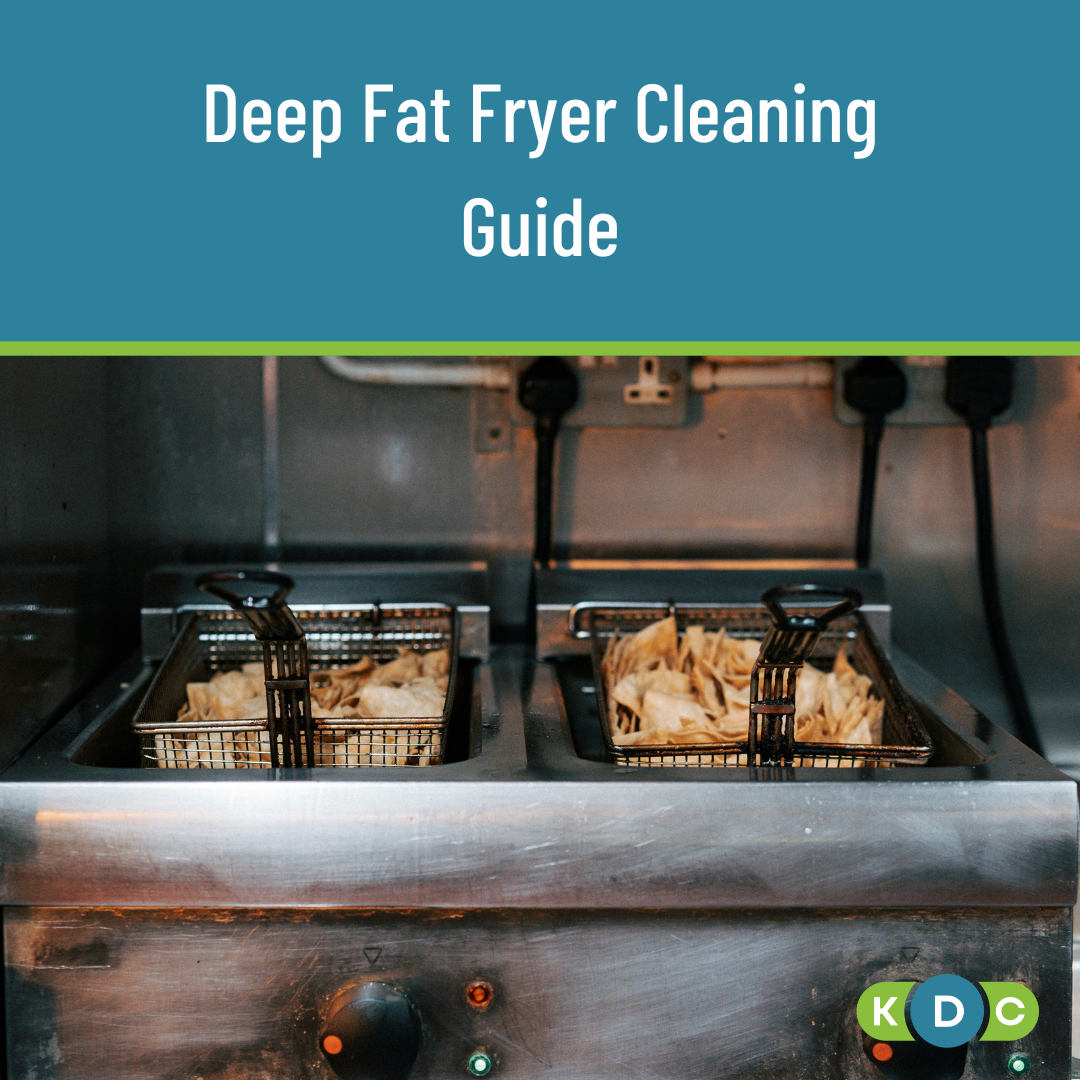
- Shared fryer oil, because the FSA warns that gluten-free chips mustn’t be cooked in oil that has been used for battered fish.
- Chopping boards and worktops, where damaged surfaces can be harder to clean effectively and may need replacing.
- Flour dust, which can settle on nearby surfaces and ingredients in bakeries and open kitchens.
- Cloths, sponges and hands, which carry residue from one job to the next.
Good commercial kitchen allergen cleaning controls name each of these points, rather than relying on a general “clean down”.
What cleaning protocols help reduce allergen cross-contact risk?
Cleaning helps control allergen cross-contact in a commercial kitchen by doing one thing well: physically removing the residue. So the best protocols put removal first and disinfection second. Disinfectants deal with microorganisms, but they don’t remove allergen residue, according to the FSA’s cleaning review. That’s why the scrubbing step can’t be skipped.
The exact method depends on the equipment and the cleaning products, but the principle is the same: remove food residue thoroughly before anything is used for another order. As general guidance, not a validated method, allergen cleaning protocols in a commercial kitchen usually look like this:
- Take equipment apart where the manufacturer’s instructions allow, so residue trapped around blades, seals and joints can be reached.
- Remove loose food and rinse away debris.
- Wash with detergent, scrubbing surfaces as the manufacturer and product label direct.
- Rinse off the detergent.
- Disinfect where food hygiene calls for it, following the product label. Standards such as BS EN 1276 show activity against bacteria, not allergen removal.
- Dry with disposable towels or let items air dry.
Tools and set-up count as much as the chemicals:
- Use disposable blue roll or properly laundered colour-coded cloths. Reusable sponges and tea towels can spread residue.
- Keep dedicated utensils and boards for orders for customers with a food allergy. Some kitchens use purple for this, though colour-coding schemes vary and none is a legal requirement.
- Prepare those orders first only if the equipment and work area have been properly cleaned and your other controls are in place. Going first doesn’t make an order safe on its own.
How to check and record allergen cleaning
The question every supervisor has to answer is whether the cleaning routine is actually working. Commercial kitchen allergen cleaning best practice comes down to writing the method down, training people in it, checking it’s followed and keeping records.
Validation, verification and testing
Validation asks whether a cleaning method has actually been shown to remove the allergen residue. Verification is the day-to-day check: are staff following the method and completing the checks? The FSA’s review highlights gaps in practical guidance for catering businesses, and notes that how well cleaning works depends on factors such as the food residue, the surface, the equipment and the cleaning method. Allergen-specific testing can be useful for validating a method, but whether it’s right for you depends on your equipment, the allergen and your budget. Build a cleaning routine that fits your kitchen, and pick checks you can realistically keep up.
Adenosine triphosphate (ATP) swabs show how clean a surface is in general. But the FSA review notes they’re not suitable for validating allergen removal, because they aren’t allergen-specific. So they’re a handy general check, but they can’t stand in for allergen-specific testing.
An allergen cross-contact cleaning checklist
A checklist helps staff do the same thing every shift. A useful one covers:
- Which equipment and surfaces must be cleaned between tasks
- The approved cleaning method, including which parts to dismantle
- Which detergents and other products to use, and how
- Dedicated or colour-coded utensils, where you use them
- Who does the clean and who checks it
- What happens if a check fails or residue remains
- Staff training and the records that go with it
Keep Control of Substances Hazardous to Health Regulations (COSHH) data sheets with your wider cleaning schedule. They cover chemical safety, not whether an allergen clean has worked. Records are also handy if an environmental health officer (EHO) or an auditor asks how you control allergens, though no checklist can guarantee an inspection outcome.
Clean-looking isn’t the same as allergen-safe
A spotless-looking surface can still be holding protein residue, so a quick visual check isn’t proof the job’s done. Real control comes from physically removing residue, keeping separate equipment where it matters and recording that the routine happens every shift.
Specialist deep cleaning is a separate job. It supports wider kitchen hygiene by reaching areas outside routine cleaning, such as extraction systems and the spaces behind and beneath equipment, but it doesn’t replace your own allergen-specific procedures.
For commercial kitchen deep cleaning or cooking equipment cleaning, KDC Kitchen & Duct Clean Ltd works in London and nationwide, with trained in-house staff and out-of-hours availability. Get in touch with us for a quote.
FAQs
How often should shared equipment be cleaned?
After every use with an allergen and before it’s used for an order for a customer with a food allergy. That includes blenders, slicers and boards, mid-service as well as at close. If equipment can’t be cleaned reliably between orders, don’t use it to prepare food for a customer with an allergy. Use suitable, properly cleaned dedicated equipment instead.
Can a dishwasher remove allergens?
It depends on the item, the cycle, the detergent and how the equipment is loaded. The FSA’s literature review flagged gaps in the evidence for commercial catering, so follow your dishwasher and chemical suppliers’ instructions rather than assuming a cycle has removed everything.
Is a “may contain” label a substitute for cleaning?
No. Precautionary allergen labelling is voluntary, and the FSA notes there’s no specific legal requirement to use it. It’s meant to reflect a genuine risk that remains after careful risk management, not one you could have cleaned away.
Is hand sanitiser enough between allergen tasks?
No. The FSA’s guidance covers washing hands between preparing dishes with different allergen profiles, and its cleaning review notes that disinfectants and sanitisers don’t remove allergenic food residue. Use soap and water before preparing food for a customer with an allergy.
Who’s responsible for allergen cleaning controls?
The food business operator carries legal responsibility, even when tasks are delegated. In practice, that means setting the method, training staff, checking it’s followed and keeping records.